
Getting Into Oxford or Cambridge as a Singaporean Student: A Practical Guide (2026)
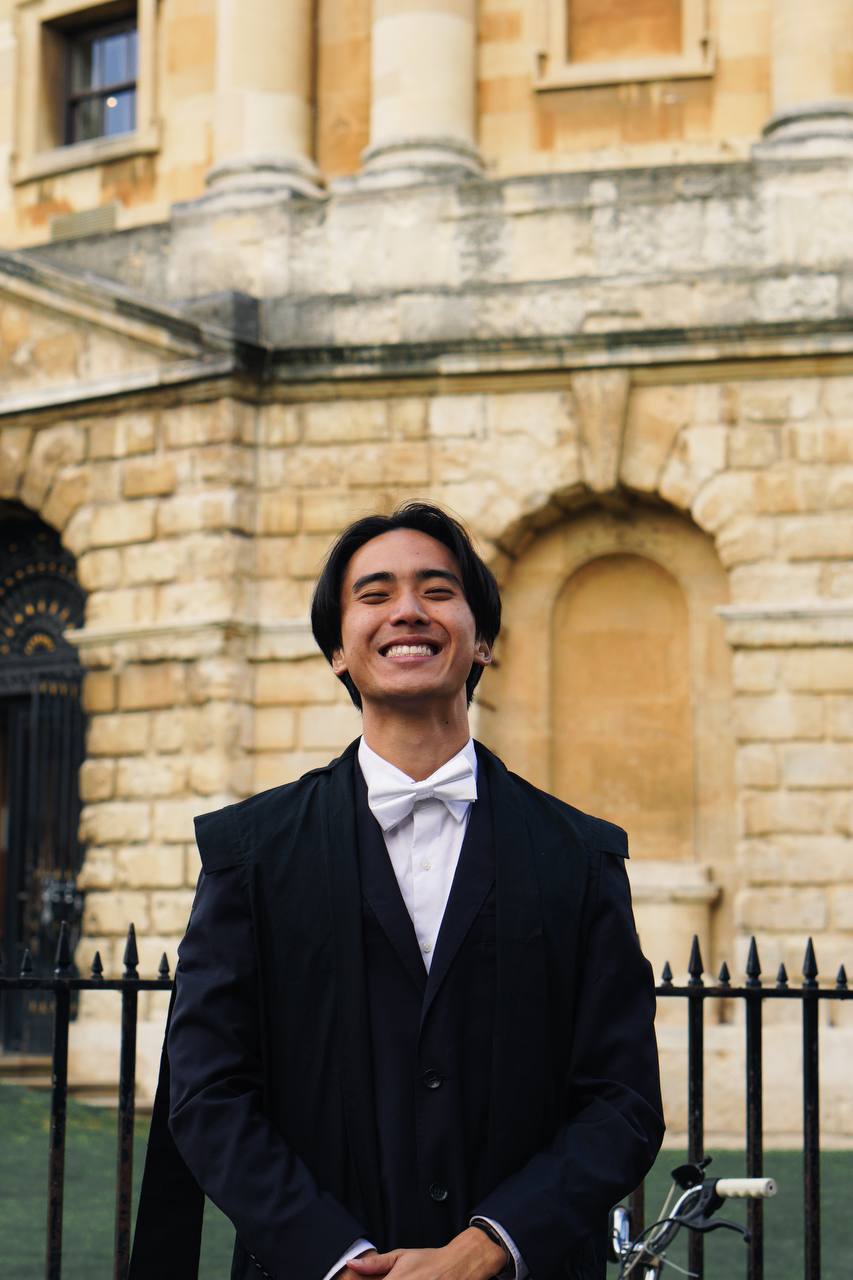
I applied to Oxford for Economics and Management from Singapore a few years ago and got in. Since then, I've helped more than fifteen Singaporean students through the process, most of them now at Oxford or Cambridge. What follows is what I wish someone had told me at the start, plus the patterns I've seen repeat every single cycle.
Before anything else, the numbers. Singapore is one of the strongest countries in the world for Oxbridge admissions. In the 2024 cycle, Singaporean applicants had a 26.5% success rate at Cambridge, against a university-wide acceptance rate of around 16%. At Oxford, Singapore is consistently among the top-performing international countries, well above the non-UK average of roughly 7.6%. Singapore does something unusual: it sends huge numbers of applicants and a disproportionate share of them get in.
That matters because it changes the mental frame. Oxbridge from Singapore is not a long shot. It is a realistic goal for students who prepare properly. Most of the students I've worked with went in with the same fear (that they weren't "the type" who gets in) and came out with offers. The quiet truth is that the process rewards preparation far more than it rewards innate genius.
This guide is for Singapore JC and IB students applying for 2027 entry (and the parents making sense of it alongside them). It's written from the inside.
What Oxbridge is actually looking for
The thing that took me longest to understand, and the thing that takes most Singaporean students longest to understand, is that Oxbridge is not looking for the same profile as NUS, NTU or the American Ivies.
NUS rewards the well-rounded student: strong grades, leadership positions, community service, extracurriculars. American universities reward that same profile plus a compelling personal narrative. Oxbridge rewards something narrower and, once you see it, quite specific: deep, demonstrable intellectual engagement with one subject.
The tutors reading your application and eventually interviewing you are looking for someone they want to teach. The teaching system at both universities is built around weekly tutorials (Oxford) or supervisions (Cambridge) where you defend your ideas one-to-one or in small groups. A student who learned to give the expected answer in school but has never formed their own view on anything will struggle with this, and tutors can smell it through an interview within about three minutes.
The strongest candidates I've coached shared three things:
They read around their subject for pleasure, not for the application. By the time they were writing their personal statement in July of J2, they already had a stack of books they'd read because they wanted to, a handful of half-formed opinions they were still working out, and a list of questions they didn't yet have answers to. They weren't cramming this in August.
They could change their mind in real time. This is the interview skill. When an interviewer says "okay, but what if the data said the opposite," the weak candidate defends their original position. The strong candidate says "that would change things, let me think," and then actually thinks. The single biggest predictor of interview success I've observed is how comfortable a student is with being visibly uncertain in front of an academic.
They wanted this specific subject, not Oxbridge. The students who apply to Oxbridge because "it's Oxbridge" tend not to get in. The ones who apply because they want to study Economics, or Engineering, or History at this specific department do.
If that sounds like you (or your child), keep reading. If it sounds like a stretch, it's still worth reading, because a lot of the gap is closeable in twelve to eighteen months with the right work.
Grades: what you actually need
Both universities accept Singapore's main school-leaving qualifications.
A Levels: The standard offer is AAA at H2 for most courses. Singapore doesn't award A* at A Level, so courses that normally require A* at UK A Level typically treat a Singapore H2 A as equivalent. Some Cambridge colleges occasionally ask for a Distinction at H3 in place of A*. H1 subjects almost never factor into offers.
International Baccalaureate (IB): Offers typically sit at 38 to 42 points overall with 776 or 777 at Higher Level, depending on course. Some courses specify which subjects need the 7s, so check the individual course page.
Integrated Programme (IP) students who haven't sat O Levels submit internal school results instead. This is standard and not a disadvantage.
The line that actually matters is predicted grades. Your school's predictions are the initial filter before anything else is read. If your teachers aren't predicting you AAA (or IB equivalent), your application is unlikely to progress to interview regardless of how good the rest of it is. Have this conversation honestly with your form tutor by the end of J1. If the predictions aren't there yet, you still have time to change them.
The admissions test landscape (and why it changed in 2026)
This is the part of the application most likely to catch Singaporean students out in 2026 and 2027, because the testing system has been completely overhauled and a lot of the advice floating around online is out of date.
Here's what's actually true for 2027 entry:
From 2026 onwards, Oxford moved nearly all of its in-house tests (MAT, TSA, PAT, BMSAT, HAT, and others) to a shared system run by UAT-UK, delivered at Pearson VUE test centres. You now sit one of three tests depending on your course:
TMUA (Test of Mathematics for University Admission) , for Oxford Maths, Computer Science, Maths and Philosophy, Maths and Stats, Maths and CS. This replaced the MAT. Cambridge also uses TMUA for its equivalent courses, so you only sit it once.
ESAT (Engineering and Science Admissions Test) , for Oxford Engineering Science, Physics, Physics and Philosophy, Biomedical Sciences. Cambridge uses ESAT for Engineering and Natural Sciences. Again, one sitting covers both.
TARA (Test of Academic Reasoning for Admissions) , for Oxford Economics and Management (my own course), PPE, History and Economics, History and Politics, Human Sciences, Psychology, Psychology and Philosophy and Linguistics. This replaced the TSA.
Outside the UAT-UK system, two tests remain independent:
UCAT , required for Medicine at Oxford, Cambridge and most other UK medical schools. Sat in the summer before applications (so July to September of J1 summer), which catches a lot of students out.
LNAT , required for Law at Oxford. Cambridge Law does not require the LNAT; instead, Cambridge uses the Cambridge Law Test, which is sat at interview. This distinction matters: I've seen students over-prepare for the LNAT when applying to Cambridge Law and under-prepare for the Cambridge Law Test.
A few courses have dropped their admissions tests entirely for 2026 onwards. Before you start preparing anything, go to the official Oxford or Cambridge course page for your specific course. The testing landscape changed in 2025 and continues to shift. Don't rely on secondhand advice, including well-meaning advice from your seniors who applied in 2023.
Registration for October tests typically opens in August and closes by late September. Missing registration is a hard stop on your application. Set a calendar reminder now.
The timeline for 2027 entry (if you're reading this in April 2026)
Today is April 2026. If you're a J1 or IB Year 1 student aiming for 2027 entry, you're applying in October 2026, which is six months away. If you're a J2 or IB Year 2 student who pushed this decision late, you still have time but you're working tight.
Here's the honest timeline.
Now through June 2026. If you're still in J1, this is when the real foundation gets built. Read. Do supercurriculars that are actually relevant to your subject (more on this below). Start thinking seriously about which course at which university. For Economics and related subjects, this is also when you should start getting comfortable with the TARA format.
July and August 2026. Personal statement drafting begins. You'll write five to ten versions of this before it's good. Register for your admissions test before the September deadline. Firm up your college choice (or make an open application).
15 October 2026. Hard UCAS deadline. This is earlier than the January deadline for most UK universities. Personal statement, school reference and UCAS form must all be in.
Late October to early November 2026. Admissions tests at Pearson VUE centres in Singapore.
Late November 2026. Interview shortlisting. If shortlisted, your interviews are typically in December. Oxford and Cambridge now run most international interviews online, which is a significant change from pre-2020 and a genuine advantage for Singapore students (no London flight in the middle of Prelims).
January 2027. Decisions released. Offers are conditional on final exam results.
May to June 2027. A Level or IB exams. You confirm your place by meeting the conditional offer.
The personal statement (where most Singaporean students lose the application)
The personal statement is 4,000 characters, roughly 600 to 650 words, and it goes to all five universities on your UCAS form simultaneously. For Oxbridge specifically, it should be almost entirely academic.
This is where the Singapore education culture works against most applicants. We are trained from secondary school to present ourselves as well-rounded: CCA leadership, community service, character growth, overcoming setbacks. That profile is exactly right for NUS, Yale-NUS, and the US Ivies. For Oxford or Cambridge, opening your personal statement with your CCA leadership is the single most common mistake I see, and it reliably costs applications.
The Oxbridge tutor reading 200 personal statements in a month is looking for one thing: evidence that you are already thinking like someone who studies this subject at university level. They are not looking for evidence that you are a good person, a leader, or well-rounded. Those things are assumed and also not their problem.
What an Oxbridge personal statement should do:
Demonstrate that you have read and thought about your subject beyond the syllabus. Name specific books, papers, or problems. Don't just list them , say what you thought about them, where you disagreed, what you're still working out.
Build a coherent intellectual narrative. The best statements read as one person's genuine trajectory of curiosity rather than a collage of achievements. You should be able to draw a line from paragraph to paragraph.
Show intellectual humility. "I thought X until I read Y and now I think Z, though I'm still uncertain about W" is worth far more than "I have always been passionate about economics."
What not to do: generic openings about childhood passion, long descriptions of work experience or service learning, lists of competitions and positions, and anything that reads like it could have been written by any other applicant.
If you're applying to Oxbridge and applying to the US, many students write one primary personal statement for Oxbridge and adapt the rest for the US Common App supplementals. Trying to serve both with one document almost always weakens the Oxbridge version.
This is the single part of the application where outside input makes the biggest measurable difference. Not because it needs editing for grammar, but because the people who read Oxbridge personal statements for a living can tell you within ten seconds which paragraphs a tutor will actually keep reading.
The interview (the part Singapore students are least prepared for)
If you get shortlisted, interviews happen in December. For most international courses, they're now run online. You'll usually have two interviews, sometimes three, each lasting 20 to 30 minutes.
Here's what I wish I'd understood before my first one.
The interview is not an exam. The interviewer is not trying to catch you out. They are running a miniature tutorial to see whether they'd enjoy teaching you for three years. They deliberately give you problems you haven't seen, push back on your answers, and watch how you respond. The test is not whether you get the right answer. The test is how you think out loud, how you handle being wrong, and whether you can make intellectual progress in real time.
A student who gets a maths question wrong but thinks carefully, spots their mistake, and corrects it will usually beat a student who gets it right on autopilot. I've seen this repeatedly.
Singapore's school system trains you extremely well for structured exams. It does not train you to think out loud under pressure, to sit with a problem you don't immediately know how to solve, or to change your position mid-sentence when the interviewer suggests a better idea. Those are all skills you have to deliberately build, and they take months to build properly.
The things that matter most in interview preparation:
Genuinely unseen questions. The point of mocks is not to rehearse answers. It's to get comfortable sitting with questions you can't immediately answer. If your mock interviewer is going easy on you, the mock is worthless.
Thinking out loud as a habit. Most Singapore students default to silent thinking. In an Oxbridge interview, silence reads as panic. You have to practise narrating your reasoning even when you're unsure, which feels deeply unnatural at first.
Being okay with changing your mind. When the interviewer says "what if the opposite were true," the wrong instinct is to defend. The right instinct is to genuinely consider, say "that would change things," and adjust. Singapore students, in my experience, are particularly resistant to this because our school system rewards committed answers.
Subject-specific depth. Generic "interview coaching" about strengths and weaknesses is almost useless for Oxbridge. What helps is actually working through the kind of problems your course will throw at you. Economics candidates need to practise on-the-spot economic reasoning. Medicine candidates need to reason through clinical scenarios. Engineering candidates need to derive things they've never seen. There's no shortcut.
What the strong applicants were doing in J1 that the weak ones weren't
Every year, the gap between the students who get offers and the students who don't tends to come from what happened twelve to eighteen months before the application, not the application itself.
Here's what the strong applicants I've coached were doing in J1:
Reading real books in their subject. Not pop-science. Not exam textbooks. Actual books that someone in their subject at university would read. For Economics, that meant things like Banerjee and Duflo's Poor Economics, Raghuram Rajan, or specific papers they found through their reading. For History, full historical monographs, not school textbooks. For Engineering, books on real engineering problems, not Maths olympiad prep.
Entering essay competitions. The John Locke, the Immerse Education essay prize, the Oxford Global Online Research competitions, the various university-run essay prizes. Not because the prize matters, but because forcing yourself to write a 2,000-word academic argument teaches you more in a month than a year of passive reading.
Attending summer programmes that were actually intellectual. Not the "experience Oxford" tourist programmes. The LSE Summer School, ECO's Cambridge courses, PROMYS (for maths), research placements at NUS or NTU labs. Anything where they were treated as a student, not a customer.
Shadowing professionals (for Medicine and Law especially). Not just for the UCAS statement, but to actually find out whether they wanted to do this for the rest of their lives.
Having opinions about their subject. This sounds obvious. It isn't. Most students can tell you what their textbook says about monopoly pricing or the causes of WWI. The strong applicants could tell you what they thought about it, and why, and what they were uncertain about.
If you're reading this in J1 and none of this is in place yet, that's fine. You have six to eighteen months to build it. Start with one thing this week. Pick a book. Actually read it.
Getting support in Singapore
There are three kinds of support worth knowing about.
Your JC's own Oxbridge programme. Raffles Institution, Hwa Chong, NJC, VJC, ACJC and a handful of others run internal Oxbridge programmes with alumni returns, mock interviews, and personal statement coaching. If your school has this, it's usually free and genuinely good. Use it first before paying for anything.
Independent Oxbridge admissions coaching. For students whose schools don't offer this, or who want more intensive help than the school programme provides, several organisations in Singapore and the UK offer paid coaching. The market is uneven. Some coaches are genuinely excellent; others are generic university admissions consultants who learned Oxbridge from a manual. The things to look for: coaches who actually went to Oxford or Cambridge themselves (and can name their college and course without hesitation), specific experience with Singapore's A Level and IB qualifications, and a real track record of recent successful applications , not just a list of universities their students attend.
MACRO Academy's Oxbridge coaching. I run Oxbridge admissions coaching at MACRO Academy. My background: Oxford, Economics and Management, BA. Over the last four years I've coached more than fifteen Singapore students through successful Oxbridge applications, across Economics, PPE, Engineering, Natural Sciences, HSPS and History. The coaching covers course and college choice, personal statement drafting across four to six iterations, admissions test preparation (TARA, TMUA, ESAT, LNAT and UCAT), and mock interviews that are genuinely unscripted rather than rehearsed.
MACRO runs from four locations in Singapore , Upper Thomson, Kovan, Bukit Timah and Siglap , and we work with students from most top JCs and IB schools. If you want to talk through whether the coaching is right for you, book a free consultation at www.macroacademy.org or WhatsApp +65 8366 2396.
Online resources worth reading before spending money on anything. The official Oxford and Cambridge admissions pages are the best starting point. Oxbridge Asia, Doxa, and UniAdmissions all publish decent free material specifically for Singapore applicants. The r/6thForm and r/OxfordUni subreddits have frank discussion of the application experience, though filter aggressively for UK-specific vs international-specific advice.
Common mistakes I see every cycle
Starting too late. Students who begin thinking seriously about Oxbridge in September of their application year are already behind the ones who started two summers earlier. If you're in J1 now, you're on time. If you're in J2 and haven't started, you're not doomed but you need to move quickly.
Writing a personal statement that reads like an NUS application. Leadership, CCA, community values. These belong in your NUS statement, not your UCAS one. If your Oxbridge personal statement could be submitted unchanged to NUS, it's wrong.
Missing the admissions test registration deadline. Every year, a handful of strong applicants lose their Oxbridge shot because they missed the late September test registration window. Put it in your calendar the day you start the application.
Treating interview preparation as polish. Mock interviews with your school counsellor who's asking "why Oxford?" are not Oxbridge interview prep. You need to practise with someone who will give you problems you haven't seen and push back when you answer.
Applying to Oxbridge and NUS/NTU with the same strategy. Both deserve serious preparation, and the preparation is completely different. Trying to apply to both with one generic strategy usually weakens both.
Not applying at all because "people like me don't get in." The Singapore success rate at Cambridge is 26.5%. For a reasonably prepared student with the right grades, a rejection means you still have four other UCAS choices plus your local universities. The downside of applying is low. The cost of not trying is permanent.
FAQs
What grades do I need to apply to Oxford or Cambridge from Singapore?
For A Level applicants, AAA at H2 is the standard, with strong predicted grades. For IB, 38 to 42 points with 776 or 777 at Higher Level. These are minimums. The applicants who actually get offers typically exceed them. Your school's predicted grades are the initial filter.
Can polytechnic students apply?
Technically yes, but practically very difficult. Oxford and Cambridge don't recognise the polytechnic diploma as a standard school-leaving qualification, so poly students usually need to take A Levels or IB independently, or go through a foundation programme. Contact the university admissions offices directly if this is your situation.
How much does Oxbridge actually cost as a Singaporean?
International tuition at both universities runs roughly £30,000 to £42,000 per year depending on course. Add college fees and living costs, and the all-in cost of a three-year undergraduate degree sits in the range of S$220,000 to S$290,000 including accommodation. Scholarships exist. The PSC Overseas Merit Scholarship, statutory board scholarships (MAS, MOE, DSTA, EDB and others) and private scholarships (Lee Foundation, Tan Kah Kee) regularly fund Singaporeans at Oxbridge. The universities also have need-based bursaries, though these are more accessible for UK students than international ones.
Should I apply to Oxford or Cambridge, or both?
You can't apply to both. UCAS rules prohibit applying to Oxford and Cambridge in the same cycle. The choice should come down to the specific course. Look at the actual syllabus at each university, the teaching structure (Oxford's tutorial system versus Cambridge's supervision system), the college options, and any research strengths that matter for your subject. Prestige is identical between the two; course content is not.
When should I realistically start preparing?
J1 is the honest answer. Not because paperwork begins that early, but because real intellectual engagement with your subject can't be faked in two months. Last-minute profile building produces personal statements that read as hollow and interviews that fall apart. If you're in J2 and haven't started, start now anyway. The timeline is tight but not impossible.
Does MACRO Academy offer Oxbridge preparation in Singapore?
Yes. I run Oxbridge coaching at MACRO covering course and college choice, personal statement development, admissions tests (TARA, TMUA, ESAT, LNAT, UCAT) and mock interviews. Available at all four MACRO locations (Upper Thomson, Kovan, Bukit Timah, Siglap). Contact www.macroacademy.org or WhatsApp +65 8366 2396 for a free consultation.
Last thing
The best advice I can give any Singapore student thinking about Oxbridge is also the most boring. Read. Not past papers, not application guides, not admissions blogs. Your actual subject. Books, papers, whatever interests you. Form opinions about what you find. Write them down if it helps.
Everything else in the application , the personal statement, the test prep, the interviews , becomes significantly easier once you've done that. And it becomes almost impossible if you haven't.
If you have questions about anything in this guide, or want to talk through whether Oxbridge is a realistic goal for your specific situation, reach out to MACRO Academy at www.macroacademy.org or WhatsApp +65 8366 2396. First consultation is free.