


The PSLE is finally over. After months of revision, practice papers and examination preparation, your child can finally enjoy a well-deserved break.
But while the PSLE marks the end of primary school, it also signals the beginning of a very different academic journey.
For students entering Secondary 1 in 2027, the transition is not simply about changing uniforms, making new friends or adjusting to a new school environment.
It is a significant jump in academic intensity, complexity and expectations.
Mathematics becomes more abstract. Science demands deeper conceptual understanding. English requires increasingly sophisticated comprehension and writing skills. At the same time, students must manage more subjects, different teachers and greater responsibility for their own learning.
So, why is Secondary 1 harder than Primary 6, and what can parents do to help their children prepare?
Here's what every parent should understand about the P6 to Sec 1 transition in 2027.
1. Why Is the Jump from Primary 6 to Secondary 1 So Significant?
One of the biggest misconceptions about secondary school is that students are simply learning more advanced versions of what they studied in primary school.
In reality, the change goes much deeper.
The Secondary 1 syllabus in Singapore introduces greater conceptual complexity, a broader range of subjects and higher expectations for independent learning.
Three changes are particularly important:
- Greater academic depth: Students are increasingly expected to explain why concepts work, rather than simply reproduce familiar methods.
- Faster learning pace: With multiple subjects progressing simultaneously, students have less room to rely on last-minute revision.
- Greater independence: Students must take more responsibility for managing homework, clarifying misunderstandings and keeping up with lessons.
In primary school, students often benefit from structured revision, familiar question formats and close guidance from teachers.
In secondary school, these strategies may no longer be sufficient on their own.
The biggest difference? Students aren't just expected to know more. They're expected to think more deeply, apply concepts more independently and explain their reasoning more precisely.
2. Secondary 1 English, Mathematics and Science: What Actually Gets Harder?
The increase in academic rigour becomes especially noticeable when comparing Primary 6 and Secondary 1 English, Mathematics and Science.
| Subject | Primary 6 | Secondary 1 |
|---|---|---|
| Mathematics | Numerical problem-solving, fractions, percentages and ratios | Algebra, equations, abstract reasoning and multi-step applications |
| Science | Foundational concepts and familiar scientific applications | More detailed explanations, experimental analysis and scientific reasoning |
| English | Comprehension, inference and composition | More demanding textual analysis, inference and structured writing |
Secondary 1 Mathematics: From Numbers to Abstract Thinking
For many students, Secondary 1 Mathematics introduces a major shift in how they approach problem-solving.
In primary school, students spend considerable time working with numerical relationships, fractions, percentages and model-based problem-solving.
In secondary school, they encounter more formal algebraic concepts, including variables, algebraic expressions and equations.
Consider this simple example:
Primary 6 Mathematics: A number multiplied by 3 gives 24. What is the number?
Secondary 1 Mathematics: Solve the equation 3x + 5 = 2x + 13.
While both questions involve finding an unknown value, the second requires students to manipulate algebraic expressions and understand the mathematical principles behind each step.
Students who rely heavily on memorising procedures without understanding why they work may find this transition challenging.
This is why preparing for Secondary 1 Math should involve strengthening conceptual understanding, not simply completing more practice questions.
Secondary 1 Science: Knowing the Answer Is No Longer Enough
The Secondary 1 Science syllabus also places increasing emphasis on scientific reasoning, experimental skills and applying concepts to unfamiliar situations.
At the primary level, students already encounter application questions and scientific investigations.
However, secondary school builds on these foundations by requiring greater precision in explanations and a deeper understanding of scientific relationships.
For example, a student may know that heating causes many substances to expand.
At the secondary level, they may be expected to explain this observation using the particle model of matter, describing how changes in particle movement and spacing affect a substance.
Simply remembering that "heat causes expansion" is no longer a sufficiently developed explanation for such a question.
Students must learn to connect observations with scientific principles and communicate their reasoning accurately.
The challenge in Secondary 1 Science is not just remembering more information. It is learning how to use scientific knowledge to explain unfamiliar situations.
Secondary 1 English: From Understanding Texts to Analysing Them
The transition in Secondary 1 English can be equally demanding.
Primary school students already develop comprehension, inference and writing skills. However, secondary school increasingly requires students to interpret more complex texts, evaluate ideas and communicate their responses with greater sophistication.
For example, rather than simply identifying how a character feels, students may need to explain how specific words or phrases reveal the character's emotions and intentions.
In writing, students are expected to develop ideas more convincingly, organise arguments logically and demonstrate greater control over language.
Students who previously relied on memorised phrases or familiar composition structures may need to adapt their approach.
Strong Secondary 1 English skills require more than good vocabulary. Students must learn to think critically, interpret meaning and communicate ideas effectively.
3. Why Even Students Who Excelled at PSLE May Struggle in Secondary 1
A strong PSLE performance is certainly an advantage, but it does not automatically guarantee a smooth transition into secondary school.
Some students perform exceptionally well in primary school because they have mastered familiar examination formats and developed effective revision routines.
However, the academic demands of Secondary 1 may require different learning strategies.
A student who previously excelled at Mathematics through repeated practice may struggle when encountering unfamiliar algebraic problems.
Similarly, a student who memorised scientific explanations may find it difficult to apply those concepts to new experimental scenarios.
These challenges do not necessarily indicate a lack of ability.
Rather, they highlight the importance of adapting study methods as academic expectations change.
What worked for PSLE may not always be enough for Secondary 1.
The earlier students learn to approach unfamiliar questions confidently and understand concepts at a deeper level, the better equipped they may be to manage the increased academic rigour.
4. The Risk of Waiting Until Your Child Falls Behind
One of the challenges of Secondary 1 preparation is that academic gaps are not always immediately obvious.
A student may understand individual examples taught in class but struggle when required to combine several concepts in a more complex question.
This is particularly important in subjects such as Mathematics and Science, where new topics frequently build on previously taught concepts.
For example, difficulties with basic algebraic manipulation can make subsequent topics involving equations and mathematical relationships harder to understand.
Similarly, weak scientific reasoning skills may affect a student's ability to interpret experiments and construct explanations across different Science topics.
When these misunderstandings accumulate, catching up can become more demanding.
This is why early academic preparation and structured guidance can be valuable.
Rather than waiting for disappointing examination results, parents can help their children identify weaker foundations and develop effective learning habits before these difficulties become more challenging to address.
5. How to Prepare Your Child for Secondary 1 in 2027
The good news is that preparing for Secondary 1 does not mean sacrificing the entire December holiday to additional lessons.
Effective Sec 1 preparation for 2027 should focus on building the skills students will need when school begins.
Here are four practical strategies:
1. Strengthen foundational concepts.
Ensure your child understands essential Primary 6 Mathematics and Science concepts rather than relying solely on memorised methods.
2. Introduce Secondary 1 concepts gradually.
Early exposure to algebra, scientific reasoning and more demanding comprehension tasks can help students become familiar with new academic expectations.
3. Practise unfamiliar and application-based questions.
Encourage your child to explain their reasoning, identify mistakes and apply knowledge to different situations.
4. Develop independent learning habits.
Help your child practise organising assignments, reviewing lessons regularly and seeking clarification when they encounter difficulties.
Ultimately, the goal of a good P6 to S1 bridging programme should not simply be to rush through the Secondary 1 syllabus.
It should be to help students develop the conceptual foundations, learning strategies and confidence needed to approach more demanding academic work.
6. You Don't Have to Navigate the Secondary 1 Transition Alone
The transition from Primary 6 to Secondary 1 is a significant milestone, and understanding the challenges ahead is the first step towards preparing effectively.
With the right academic guidance, students can strengthen their foundations, adapt to new learning expectations and approach unfamiliar questions with greater confidence.
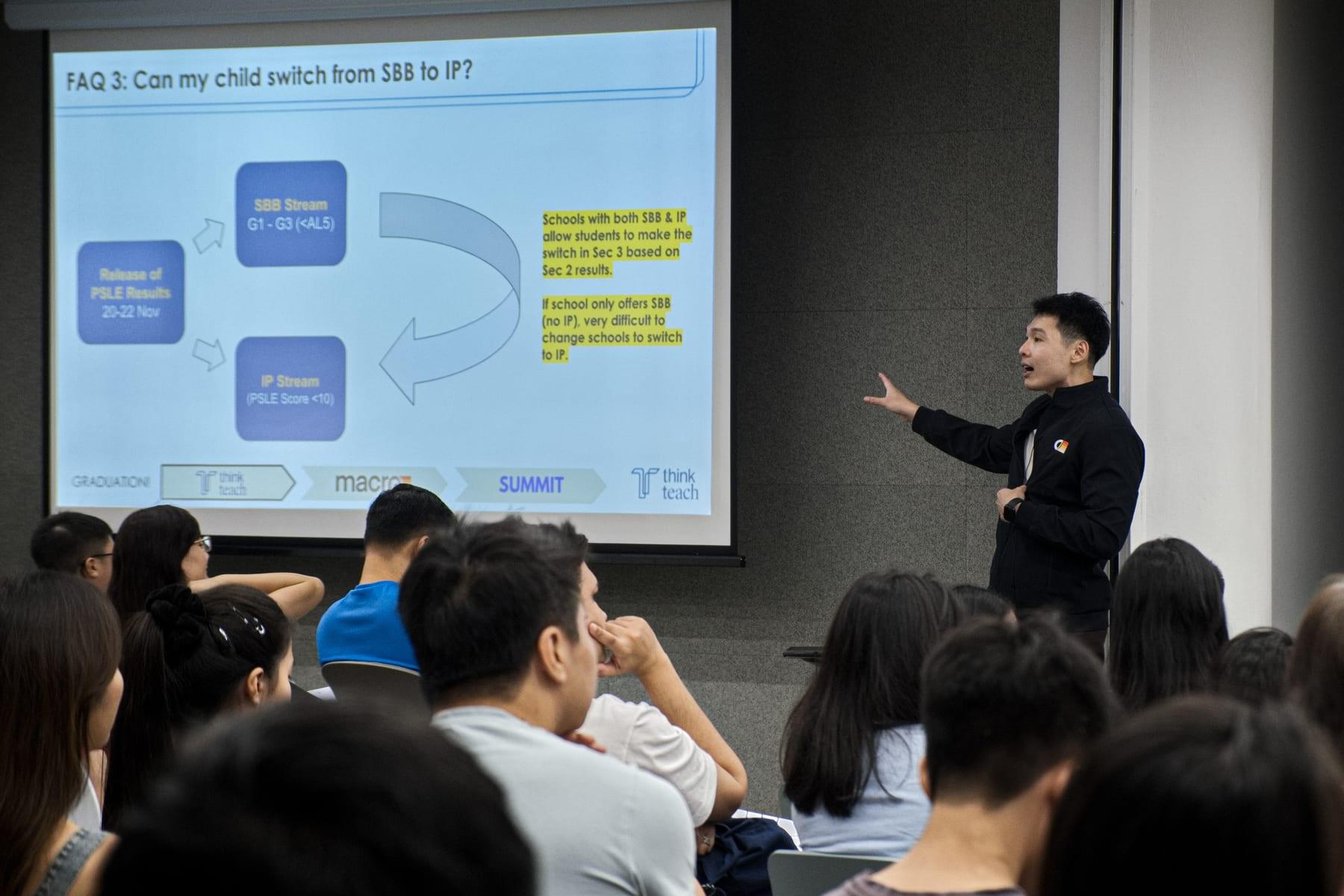
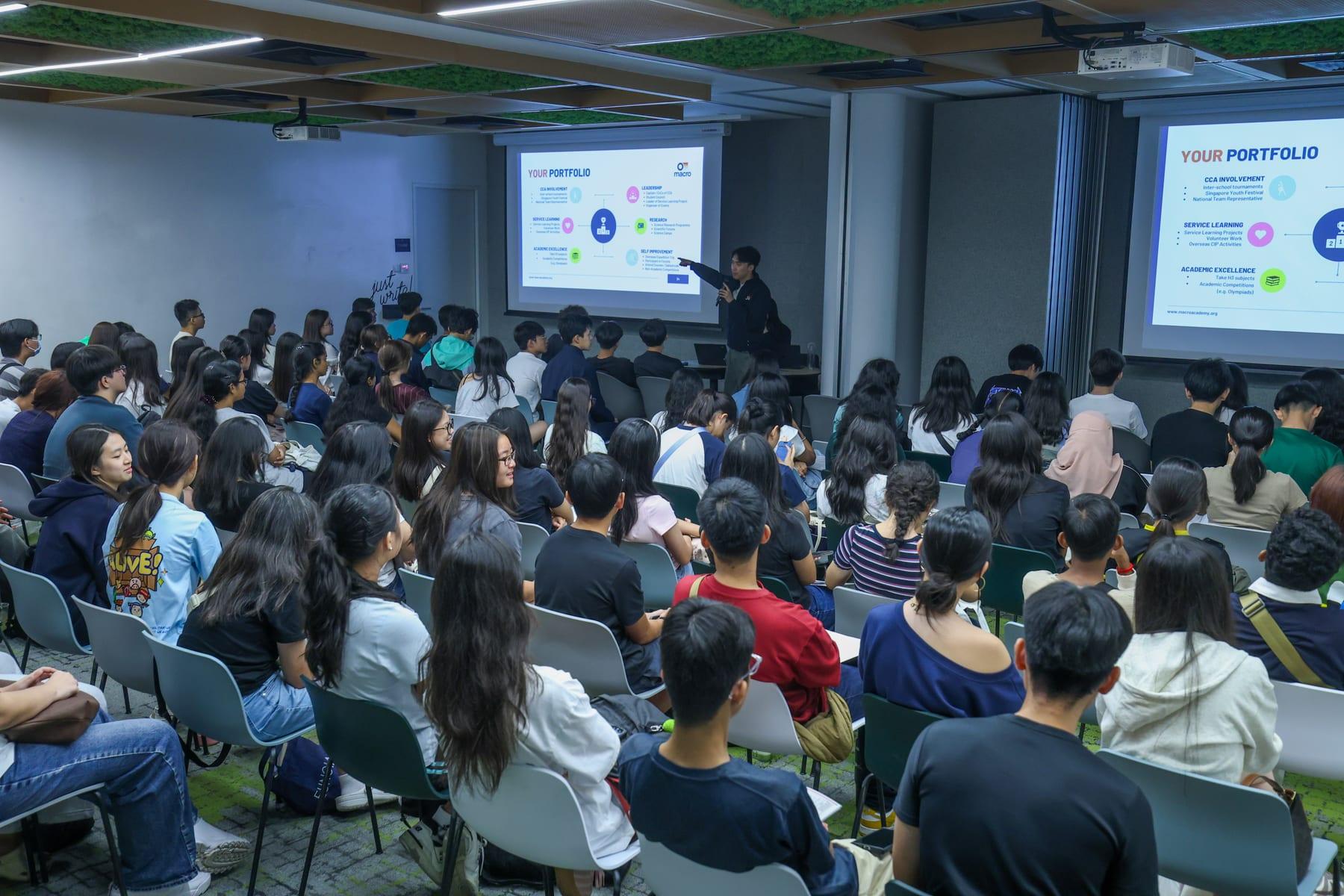
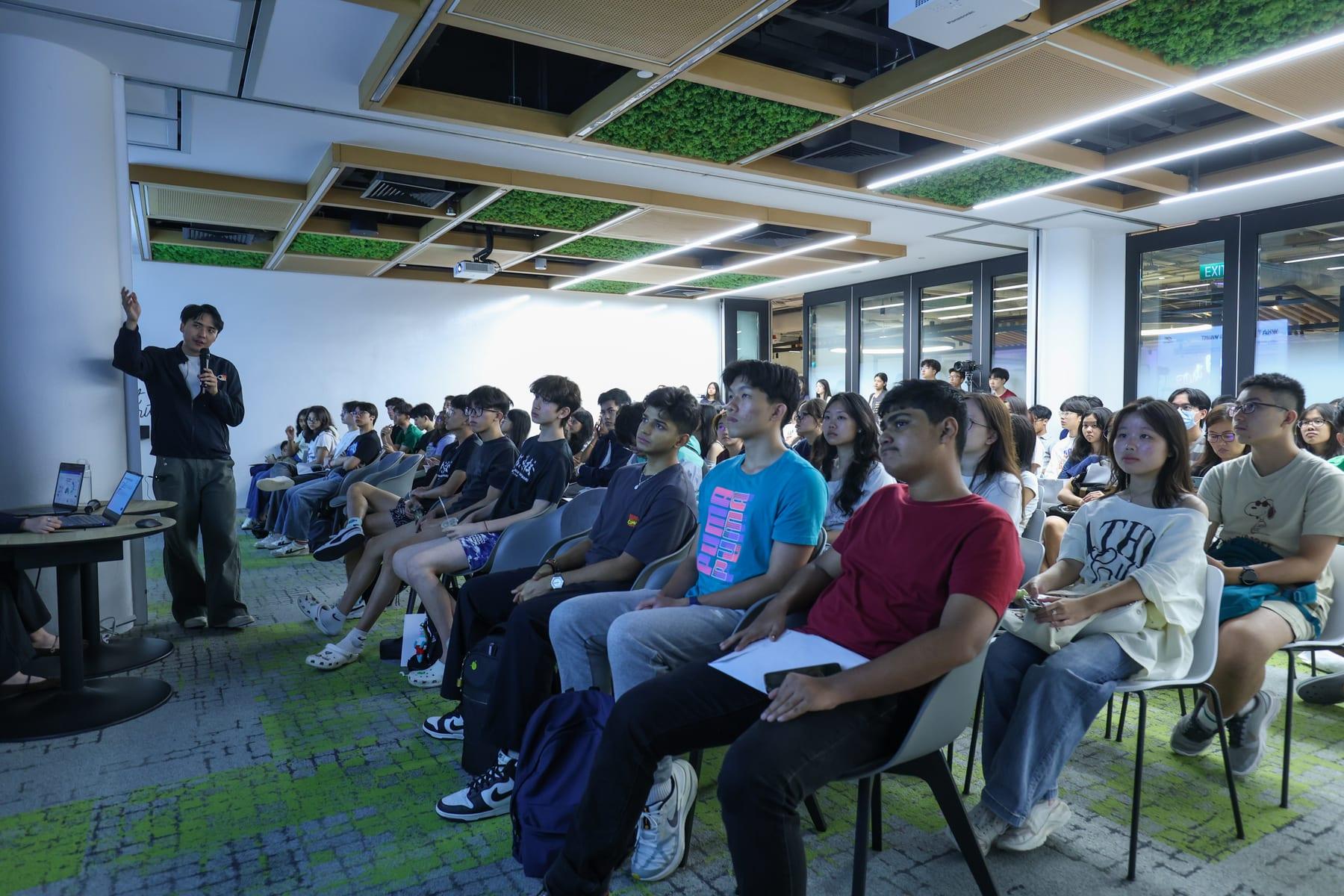
At our Primary 6 to Secondary 1 Transition Event, we aim to help parents better understand the academic jump awaiting their children in 2027.
Our academic team will share insights into the changing expectations of Secondary 1 English, Mathematics and Science, including the skills students need to navigate the increased intensity and rigour of secondary school.
Meanwhile, children can enjoy engaging hands-on activities, educational games and opportunities to celebrate this exciting new chapter.
Whether you're concerned about the difficulty of Secondary 1 Math, the demands of Secondary 1 Science, or how your child will adapt to a more rigorous academic environment, we're here to help you understand what lies ahead.
The jump to Secondary 1 is significant. But with the right preparation and guidance, your child can approach it with confidence.
Still choosing schools? Read our guides to PSLE results 2026 and Secondary 1 posting and secondary school cut-off points.
Frequently Asked Questions About the P6 to Sec 1 Transition
Is Secondary 1 much harder than Primary 6?
Secondary 1 generally introduces greater academic complexity, more subjects and increased expectations for independent learning. Students must adapt to more abstract concepts and apply their knowledge in increasingly demanding situations.
What is the hardest part of Secondary 1 Mathematics?
For many students, the transition to algebraic thinking is a significant adjustment. Understanding variables, manipulating expressions and solving equations requires a different approach from familiar numerical calculations.
How is Secondary 1 Science different from Primary 6 Science?
Secondary 1 Science builds on primary school foundations with greater emphasis on scientific models, experimental analysis, conceptual explanations and applying knowledge to unfamiliar situations.
Should my child attend a Sec 1 bridging programme before school starts?
A structured bridging programme can be helpful for students who would benefit from strengthening their foundations or becoming familiar with secondary school expectations. However, preparation should be balanced with adequate rest and personal development.
When should my child start preparing for Secondary 1 in 2027?
The December holidays provide an opportunity for gradual preparation. Reviewing foundational concepts, introducing selected Secondary 1 topics and developing independent study habits can help students transition more confidently.