


With the PSLE results 2026 approaching, one question is on the minds of many parents: Which secondary school should my child choose?
For some families, the answer seems straightforward. Look up the secondary school cut-off points 2026, compare the scores, and shortlist the most competitive schools within reach.
But is a secondary school with a lower cut-off point necessarily the best choice for your child?
The truth is that choosing a secondary school involves much more than academic results. School culture, travelling distance, co-curricular activities (CCAs) and learning opportunities can all influence your child's experience over the next four to five years.
If you're wondering how to choose a secondary school in Singapore, here's what you should consider before submitting your six school choices.
1. Understanding Secondary School Cut-Off Points 2026: What Do They Really Mean?
When researching secondary school rankings in Singapore, parents often begin by comparing PSLE cut-off points (COPs).
A secondary school's cut-off point represents the PSLE score of the last student admitted through the previous year's Secondary 1 posting exercise, for the relevant posting category.
For example, if a school had a cut-off point of 10, this means that the last student admitted in that category had a PSLE score of 10.
However, secondary school cut-off points are not fixed admission requirements.
They may change from year to year depending on student performance, school popularity, available vacancies and the preferences of each PSLE cohort.
This also means that the final 2026 secondary school cut-off points cannot be determined until the 2026 posting exercise has concluded.
Parents choosing schools in November 2026 should therefore refer to the latest available historical cut-off points rather than treating them as guaranteed admission scores.
Our advice: Use cut-off points to understand how competitive a school has been, but don't let a single number determine your child's future.
2. How to Choose Your Six Secondary School Choices Wisely
One of the most important parts of the Secondary 1 posting 2026 exercise is deciding how to rank your six preferred secondary schools.
A useful approach is to create a balanced shortlist.
| School Category | Suggested Choices | What It Means |
|---|---|---|
| Aspirational schools | 1–2 | Schools with historically more competitive cut-off points |
| Realistic options | 1–2 | Schools with historical cut-off points close to your child's score |
| More attainable options | 2–3 | Schools where your child's score is better than the previous cut-off point |
MOE strongly encourages parents to include at least two to three schools where their child's PSLE score is better than the school's previous cut-off point.
For example, if your child scores 12, a school with a previous cut-off point of 14 may be a more attainable option than one with a cut-off point of 10.
However, admission is never guaranteed, even when your child's score is better than the previous year's cut-off point.
Does the Order of Your Six Secondary School Choices Matter?
Yes, and this is something parents should pay particular attention to.
When students with the same PSLE score compete for the remaining vacancies at a school, MOE applies tie-breakers in the following order:
- Citizenship status
- Order of school choices
- Computerised balloting
This means that ranking a school higher can make a difference when students are tied on score and citizenship.
However, ranking a school first does not give a student with a weaker PSLE score priority over another student with a better score.
The best strategy is to rank schools according to your child's genuine preferences while ensuring that the overall shortlist includes a realistic range of options.
3. Beyond Secondary School Rankings: 5 Factors Parents Should Consider
Searching for the best secondary schools in Singapore 2026 may produce numerous rankings and lists of popular schools.
However, the most competitive secondary school is not necessarily the most suitable one for every student.
Here are five factors worth considering.
School Culture and Learning Environment
Every secondary school has its own culture, expectations and approach to student development.
Some schools place greater emphasis on academic enrichment, while others offer distinctive opportunities in sports, performing arts, leadership or community involvement.
Consider where your child is most likely to feel motivated, supported and comfortable asking questions.
Distance from Home
A secondary school might look excellent on paper, but what happens when your child needs to travel over an hour each way?
Long commutes can reduce the time available for rest, homework, CCAs and family activities.
When comparing secondary schools near your home, consider the actual journey during morning peak hours, rather than simply looking at distance on a map.
Co-Curricular Activities (CCAs)
Secondary school is an opportunity for students to discover interests beyond academics.
Whether your child enjoys football, robotics, dance, debate or performing arts, finding a school with suitable CCAs can make their secondary school experience more fulfilling.
Special Programmes and Subject Offerings
Different secondary schools offer different enrichment opportunities.
For example, some schools provide Applied Learning Programmes (ALPs), Learning for Life Programmes (LLPs) or specialised opportunities in areas such as STEM, languages and the arts.
Parents should explore which programmes align with their child's interests and strengths.
Your Child's Own Preferences
Perhaps the most overlooked factor is also one of the most important: What does your child want?
After all, your child will be the one attending the school, making friends and participating in its activities.
Involving children in the school selection process can help them feel more confident and take greater ownership of their secondary school journey.
4. Is a Higher-Ranked Secondary School Always Better?
It can be tempting to assume that a school with a more competitive PSLE cut-off point automatically offers a better education.
However, secondary school rankings and PSLE cut-off points primarily reflect admission competitiveness, not the overall quality of education.
A school with a less competitive cut-off point may offer excellent teachers, supportive learning environments and programmes that are particularly well suited to your child.
Similarly, attending a highly competitive school does not automatically guarantee stronger academic performance.
Students differ in their learning styles, interests and ability to adapt to new environments.
Rather than asking, "What is the best secondary school my child can enter?", consider asking:
"Which secondary school will give my child the best opportunity to learn, grow and thrive?"
That change in perspective can make school selection a much more meaningful process.
5. Where Can Parents Find Reliable Secondary School Information?
With so many websites publishing Singapore secondary school rankings and cut-off points, knowing where to find accurate information is important.
One of the most useful resources is the Ministry of Education's MOE SchoolFinder.
Through SchoolFinder, parents can research secondary schools based on:
- Historical PSLE score ranges and cut-off points
- School locations and transport accessibility
- CCAs and special programmes
- Subjects offered and school characteristics
Parents can also explore individual school websites and attend secondary school open houses to gain a better understanding of each school's environment.
Rather than relying exclusively on online rankings, combining official information with school visits and conversations with your child can lead to more informed decisions.
6. What Happens After Choosing a Secondary School?
While selecting the right school is important, it is only the beginning of your child's next educational chapter.
The Primary 6 to Secondary 1 transition in 2027 will introduce new subjects, greater independence and different academic expectations.
Students will need to adjust to more abstract concepts in Secondary 1 Mathematics, stronger scientific reasoning requirements in Secondary 1 Science, and increasingly demanding comprehension and writing tasks in Secondary 1 English.
Even students who performed well in primary school may need time to adapt to these changes. We explain what changes in each subject in P6 to Sec 1 in 2027: why the academic jump is bigger than you think.
Rather than focusing exclusively on getting into a particular secondary school, parents should also consider how to help their children develop the skills and confidence needed to succeed once they arrive.
Preparing for Secondary 1 in 2027? Join Our P6 to Sec 1 Transition Event!
Choosing a secondary school is an important milestone, but preparing your child for what comes next is equally valuable.
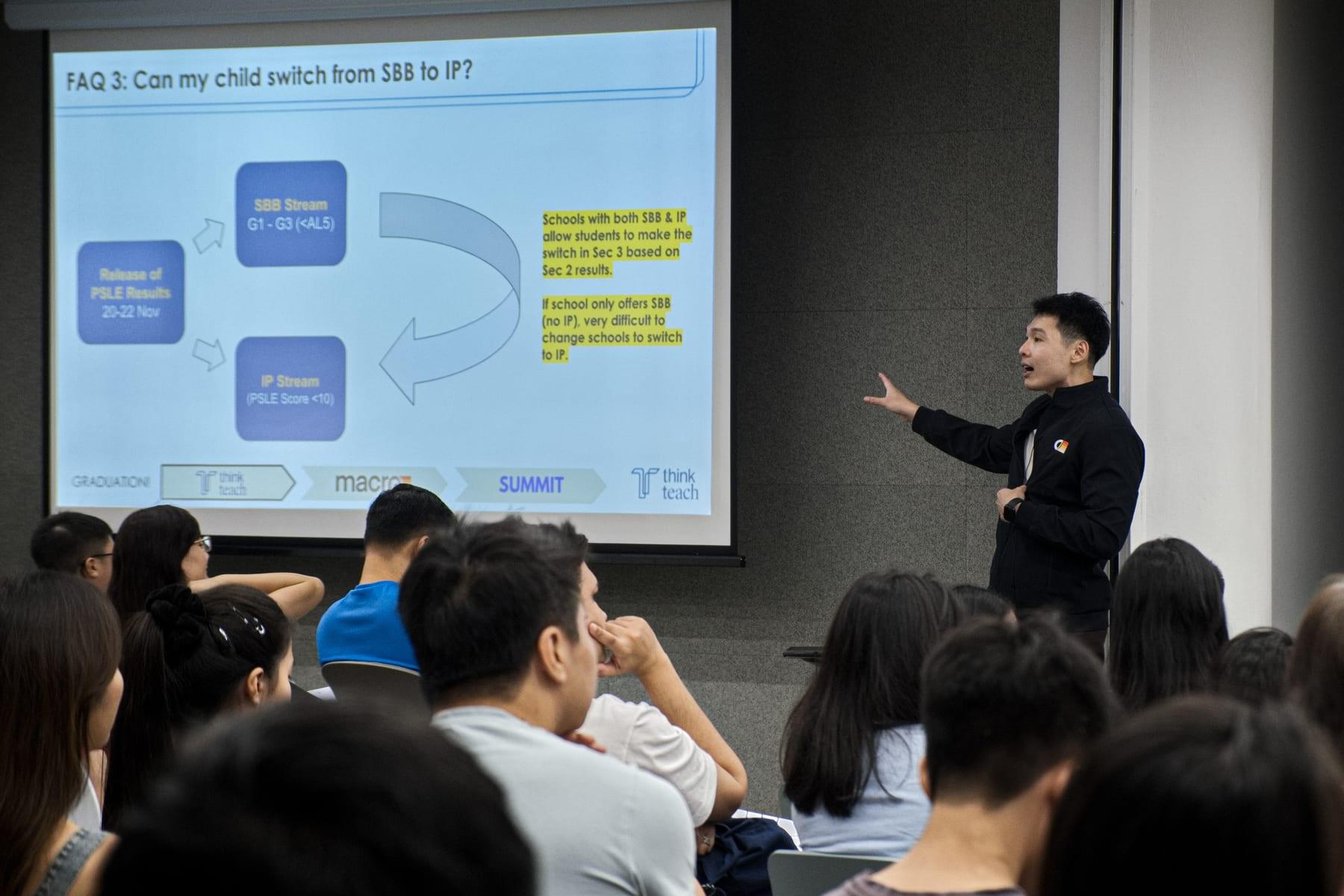
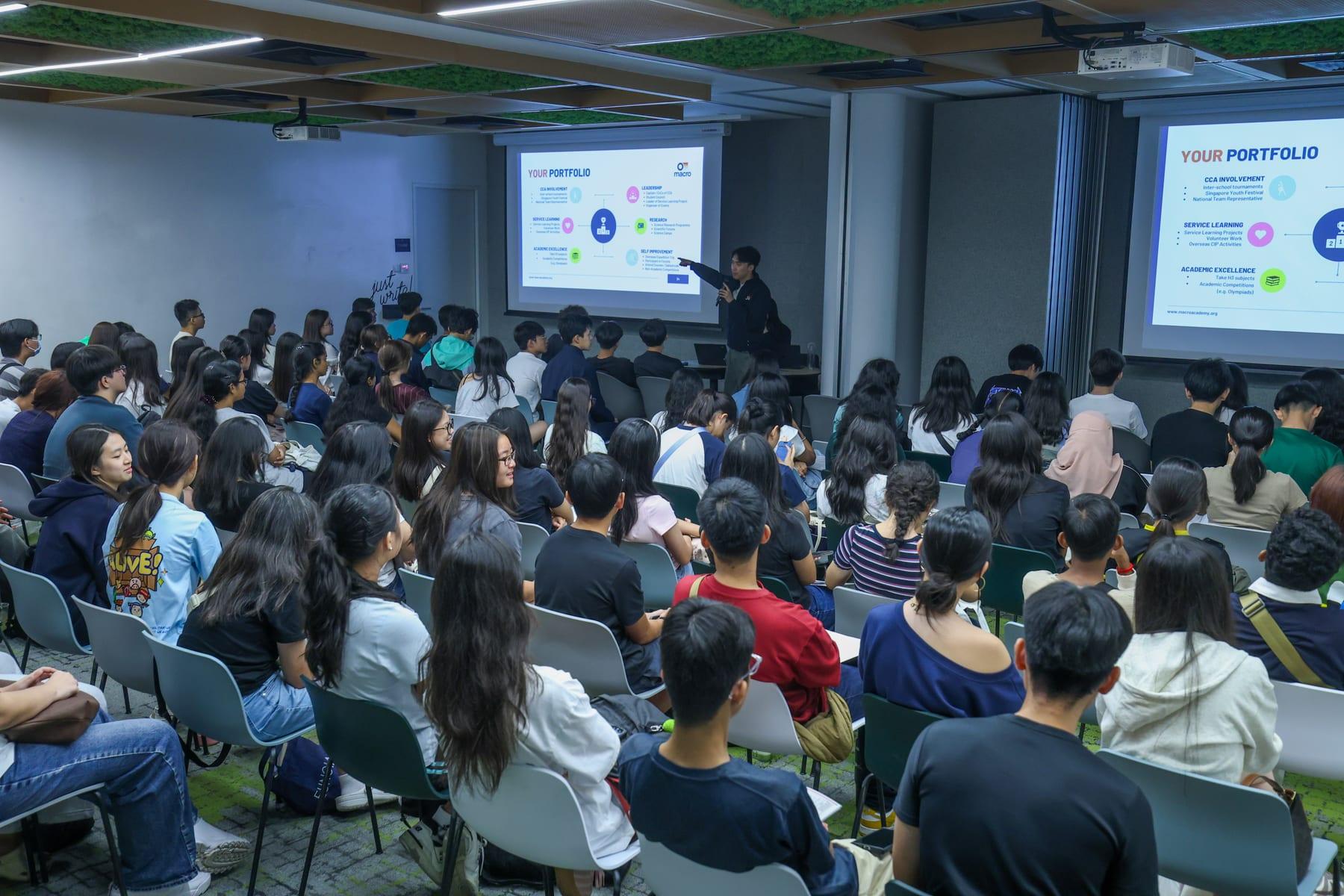
To help families navigate this transition, we're organising a dedicated P6 to Sec 1 Transition Event, designed to give parents a clearer understanding of the academic expectations awaiting their children in 2027.
Parents can look forward to insights into the transition from primary to secondary school, particularly the changes in English, Mathematics and Science.
Meanwhile, children can enjoy engaging hands-on activities, educational games and opportunities to celebrate the beginning of an exciting new chapter.
Whether you're researching secondary schools or wondering how to prepare your child for Secondary 1, we hope to help you approach the journey with greater confidence.
Frequently Asked Questions About Secondary School Selection 2026
Where can I find the secondary school cut-off points for 2026?
Parents can refer to MOE SchoolFinder for the latest available historical PSLE score ranges. The final cut-off points arising from the 2026 Secondary 1 posting exercise will only be known after posting is completed.
Does putting a secondary school as my first choice increase my chances?
School choice order matters when students with the same PSLE score and citizenship status compete for limited vacancies. However, students with better PSLE scores receive priority.
How many secondary schools should I shortlist?
Parents can submit up to six choices. MOE encourages families to include at least two to three schools where their child's score is better than the school's previous cut-off point.
Is it better to choose a secondary school near home?
Travelling distance is an important consideration, but it should be balanced against school culture, academic programmes, CCAs and your child's preferences.
How do I know which secondary school is best for my child?
Consider your child's academic needs, interests, preferred learning environment and daily commute. Use MOE SchoolFinder and school open houses to compare options beyond PSLE cut-off points.